
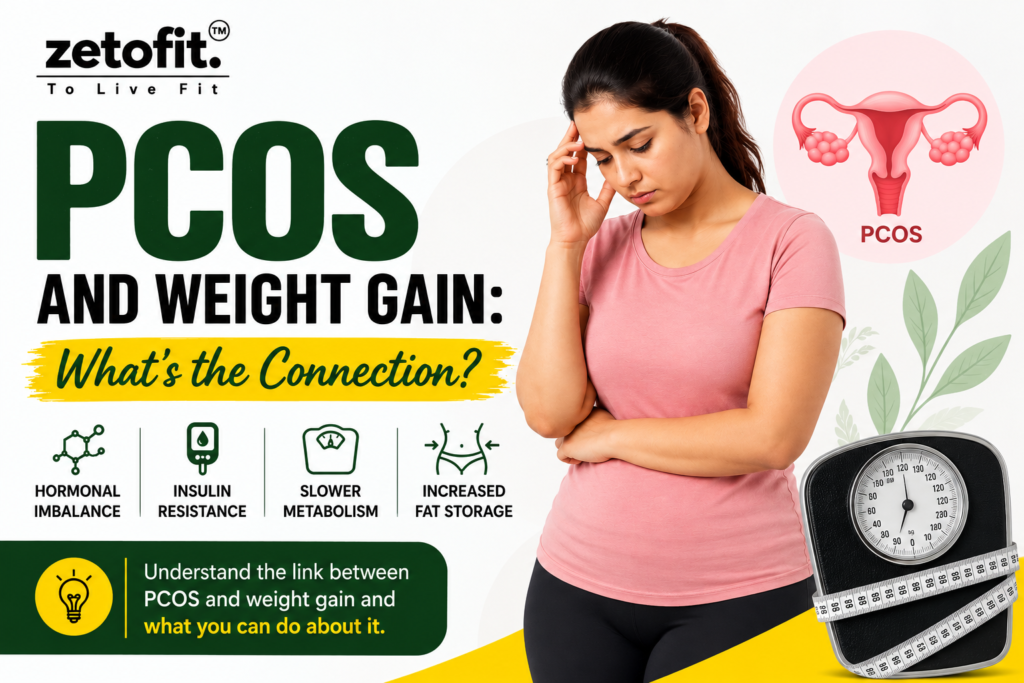
Weight gain is a common concern for people with polycystic ovary syndrome (PCOS), but the relationship between PCOS and body weight is more complicated than simply “PCOS causes weight gain.”
PCOS is a hormonal and metabolic condition that can affect menstrual cycles, ovulation, androgen levels, skin, hair growth, and metabolic health. Insulin resistance is also commonly associated with PCOS and can contribute to changes in how the body regulates blood sugar and energy.
At the same time, not everyone with PCOS is overweight, and weight alone cannot be used to diagnose PCOS.
Understanding the connection can help you focus on sustainable habits rather than restrictive diets or blaming yourself for changes in weight.
Can PCOS Cause Weight Gain?
PCOS is associated with a higher likelihood of excess weight and changes in body-fat distribution, particularly around the abdomen. However, the relationship works in both directions and varies from person to person.
Insulin resistance is one important factor. When the body becomes less responsive to insulin, it may produce more insulin to help keep blood glucose under control. Higher insulin levels can interact with ovarian hormone production and contribute to the hormonal changes associated with PCOS.
The updated international PCOS guidance also recognises that weight, insulin resistance, hormones, environment, lifestyle, and individual biology interact in complex ways.
How Does Insulin Resistance Relate to Weight?
Can You Have PCOS Without Being Overweight?
Several factors can make weight management more challenging.
➜ 1. Insulin Resistance
Insulin resistance can affect glucose metabolism and is commonly associated with PCOS. It may also coexist with other metabolic risk factors.
➜ 2. Hormonal Changes
PCOS can involve higher androgen levels and irregular ovulation. These hormonal changes can contribute to symptoms such as irregular periods, acne, and excess facial or body hair.
➜ 3. Changes in Appetite and Eating Patterns
Some people with PCOS may find hunger, cravings, or maintaining a consistent eating pattern challenging. These experiences can vary considerably between individuals.
➜ 4. Lower Activity Levels
Fatigue, busy schedules, stress, or other PCOS-related symptoms can make regular physical activity difficult.
➜ 5. Sleep and Psychological Well-Being
PCOS is also associated with an increased risk of sleep disorders and psychological difficulties. Poor sleep and ongoing stress can make healthy eating and regular physical activity harder to maintain.
Yes.
This is an important point because PCOS does not automatically mean you will gain weight.
Some people with PCOS have a higher body weight, while others have a weight within the healthy range. ACOG specifically notes that not everyone with PCOS is overweight.
Even if you are not trying to lose weight, healthy eating, regular movement, adequate sleep, and routine medical care can help support metabolic and overall health.
What Is the Best Diet for PCOS and Weight Management?
There isn’t one specific “PCOS diet” that works for everyone. Instead, focus on an overall balanced eating pattern that you can maintain long term.
Build meals around:
- Vegetables and other fibre-rich foods
- Whole grains and minimally processed carbohydrates
- Lentils, beans and other legumes
- Protein-rich foods
- Fruits
- Nuts and seeds
- Healthy sources of dietary fat
- Dairy or suitable alternatives, where appropriate
- Adequate water
Rather than completely eliminating carbohydrates, focus on portion size, food quality, fibre, and pairing carbohydrates with protein and healthy fats.
A personalised approach is often more sustainable than a highly restrictive diet.
Does Exercise Help With PCOS?
Yes.
Exercise can support cardiovascular fitness, muscle strength, metabolic
health, and body composition. Importantly, the benefits of a healthy
lifestyle can occur even when there is no weight loss.
A balanced routine can include:
➜ Strength Training
Resistance exercises such as squats, rows, lunges, presses, and other
full-body movements can help build or maintain muscle.
➜ Walking and Cardio
Walking, cycling, swimming, jogging, dancing, or other aerobic activities
can help increase overall physical activity.
➜ Everyday Movement
You don’t have to rely entirely on gym workouts. Walking after meals,
taking movement breaks, using stairs, and staying active throughout the day
can also contribute to a healthy lifestyle.
The best exercise routine is one you can perform consistently and enjoy.
Do You Need to Lose Weight to Improve PCOS?
Not necessarily.
Weight management is only one part of PCOS care. The international guideline emphasises that healthy lifestyle behaviours have benefits even without weight loss. For people at higher weight who want to lose weight, an individualised approach can be used, while also considering improvements in waist circumference and metabolic health.
For people who are overweight, even modest weight loss may improve some PCOS-related outcomes. ACOG notes that even a small amount of weight loss may help make menstrual periods more regular and can improve cholesterol and insulin levels in some women.
The goal should therefore be better health and sustainable habits—not simply reaching a particular number on the scale.
Can PCOS Cause Belly Fat?
PCOS can be associated with changes in body-fat distribution, including greater central or abdominal adiposity.
However, having belly fat does not automatically mean someone has PCOS. Abdominal weight can be influenced by many factors, including genetics, age, overall energy intake, activity levels, sleep, hormones, and other health conditions.
If you have abdominal weight gain along with irregular periods, acne, excess facial hair, or other symptoms, speak with a healthcare professional rather than trying to diagnose yourself.
What Can You Do If You Have PCOS and Want to Manage Your Weight?
Start with realistic, sustainable changes.
➜ 1. Eat balanced meals
Include protein, fibre-rich foods, vegetables, and appropriate portions of carbohydrates and fats.
➜ 2. Move regularly
Combine aerobic activity with strength training according to your fitness level and preferences.
➜ 3. Prioritise sleep
Aim for a consistent sleep routine and address ongoing sleep problems with a healthcare professional.
➜ 4. Avoid crash diets
Very restrictive diets can be difficult to maintain and are not necessary for long-term PCOS management.
➜ 5. Track more than your weight
Consider monitoring:
- Waist circumference
- Energy levels
- Strength and fitness
- Menstrual regularity
- Blood pressure
- Blood glucose and other metabolic markers when recommended
- Overall well-being
➜ 6. Get personalised medical advice
PCOS can affect different people in different ways. Your healthcare professional can assess symptoms, metabolic risk, reproductive goals, and treatment options.
When Should You See a Doctor?
Talk with a healthcare professional if you experience symptoms such as:
- Irregular or absent periods
- Excess facial or body hair
- Persistent acne
- Unexplained weight changes
- Difficulty becoming pregnant
- Dark, thickened patches of skin
- Symptoms associated with blood sugar problems
PCOS is associated with increased metabolic risks, including type 2 diabetes and cardiovascular risk factors, so appropriate health screening and ongoing care are important.
Frequently Asked Questions
Does PCOS always cause weight gain?
No. PCOS is associated with a higher risk of excess weight, but many people with PCOS are not overweight. (ACOG)
Can you lose weight with PCOS?
Yes. People with PCOS can lose weight through sustainable nutrition, physical activity, and other appropriate lifestyle or medical approaches. However, individual results vary.
Is insulin resistance the reason everyone with PCOS gains weight?
No. Insulin resistance is common in PCOS but does not affect everyone in the same way. PCOS and weight are influenced by multiple biological, lifestyle, environmental, and genetic factors. (Monash University)
Is exercise useful if I don’t lose weight?
Absolutely. Exercise can improve fitness, metabolic health, body composition, and overall well-being even when your body weight does not change. (Monash University)
Do I need a special PCOS diet?
There is no single diet that is right for everyone with PCOS. A balanced, sustainable eating pattern tailored to your nutritional needs and preferences is generally a better approach than an overly restrictive diet.
The Bottom Line
The connection between PCOS and weight gain is complex. Insulin resistance, hormonal changes, body-fat distribution, lifestyle factors, sleep, genetics, and other factors can all play a role.
Most importantly, PCOS is not a personal failure, and weight is not the only measure of health.
A sustainable approach that combines balanced nutrition, regular physical activity, adequate sleep, stress management, and appropriate medical care can support both metabolic and overall health. The international PCOS guideline recommends lifestyle management for all women with PCOS, including those who are not trying to lose weight.
For more guidance on nutrition, weight management, and PCOS support, explore Zetofit’s
Ready to Start Your Weight Loss Journey?
At Zetofit, we help you achieve sustainable results through personalized nutrition guidance, fitness coaching, and lifestyle support.
📞 +91 93018 55272 ✉️ contact@zetofit.com 🌐 www.zetofit.com
Book Your Consultation →Related Blogs
Intermittent Fasting for Weight Loss: Does It Really Work?
How IF works, its benefits, fasting methods, and beginner tips for sustainable results.
How Much Does a Nutritionist in Pune Charge Per Month
Monthly fees, packages, and what you should expect from a nutritionist in Pune.
How 16:8 Fasting & Intermittent Fasting Helps
Why the scale isn’t moving even when you’re eating less, explained.
About Zetofit
Zetofit is dedicated to helping individuals achieve sustainable health through personalized nutrition, fitness coaching, and lifestyle transformation. Our evidence-based approach focuses on long-term wellness rather than quick fixes.