
Thyroid Diet & Lifestyle Guide: Foods, Habits & Tips for Better Health
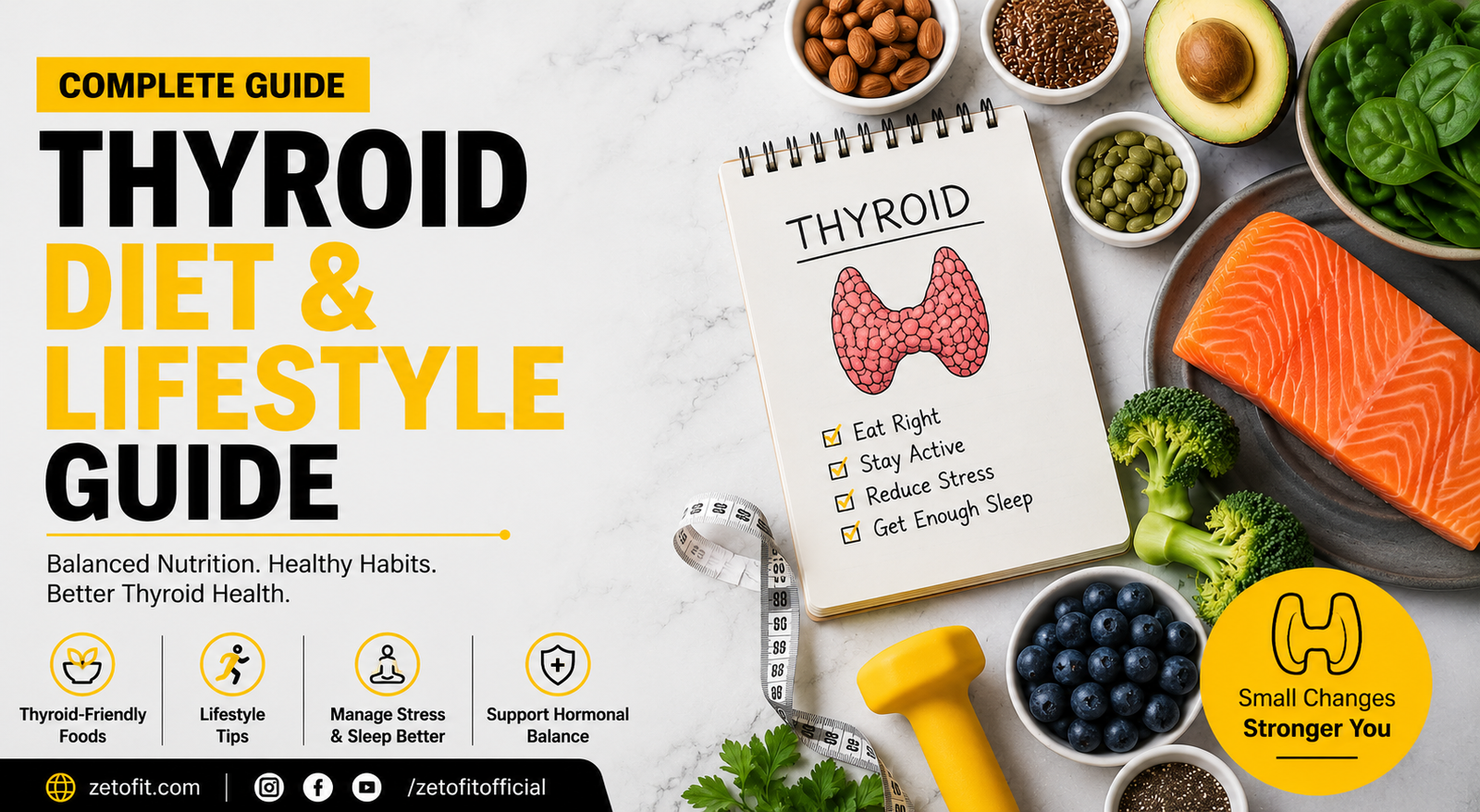
If you’ve been told you have a thyroid condition, or you’re just trying to eat in a way that supports your thyroid, you probably have a few simple questions: what should I eat, what should I limit, and does any of this actually matter alongside my medication? This guide answers those questions directly, in plain language, with an Indian-friendly meal approach you can actually use.
A quick note before you continue: This article is for general educational purposes and is not a substitute for medical advice, diagnosis, or treatment. If you have a thyroid condition or take thyroid medication, consult your healthcare professional before making significant dietary or lifestyle changes.
⚡ Quick Facts
- Gland type: Butterfly-shaped, base of the neck
- Controls: Metabolism, energy, temperature, mood
- Key nutrients: Iodine, selenium, zinc, protein
- Diet’s role: Supports overall thyroid health — not a replacement for treatment
What is the Thyroid?
The thyroid is a small, butterfly-shaped gland at the base of your neck. It produces hormones that influence your metabolism, energy levels, body temperature, and mood — which is why thyroid issues can show up in so many different, sometimes unrelated ways, from tiredness to hair thinning to weight changes.
There are two broad categories: hypothyroidism, where the thyroid is underactive (the more common condition, especially in women), and hyperthyroidism, where it’s overactive. Both are diagnosed through blood tests, and both are managed medically — diet plays a supporting role alongside that treatment, not instead of it.
Thyroid & Diet: What’s the Real Connection?
It’s worth being upfront about this: no food or diet will cure a thyroid condition, reverse thyroid disease, or replace prescribed medication. What diet can do is support your body with the nutrients your thyroid needs to function well, and help you manage some of the day-to-day effects — like energy and weight — that come with a thyroid imbalance.
Three nutrients matter most here: iodine, which is a direct building block of thyroid hormone; selenium, which helps convert thyroid hormone into its active form; and zinc, which supports hormone production. Protein also plays a quiet but important role — it helps transport thyroid hormone through your bloodstream and supports muscle mass, which tends to matter more when your metabolism is running slower than usual.
“Think of diet as support for your thyroid, not a substitute for treating it.”
Foods to Include
These are foods that generally support thyroid health and fit easily into a normal home-cooked routine:
Is dairy okay?
Yes, for most people. Dairy is actually a useful source of both iodine and protein, and there’s no general reason to cut it out unless you have a diagnosed lactose intolerance or dairy sensitivity separate from your thyroid condition.
What about soy?
Soy doesn’t need to be avoided completely. In large amounts, it can interfere with the absorption of thyroid medication and iodine, so the practical approach is moderation — an occasional serving of soy milk, tofu, or edamame is generally fine, especially if it’s not eaten at the same time as your medication.
How does protein help?
Protein supports the transport of thyroid hormone in your blood and helps maintain muscle mass, which can be affected when metabolism slows down. Including a source of protein — dal, eggs, paneer, chicken, or fish — at most meals is a simple, practical habit.
Foods to Limit
Nothing here needs to be eliminated entirely — these are foods to be mindful of rather than avoid outright:
Is a gluten-free diet necessary?
Not for everyone. A gluten-free diet is only necessary if you have celiac disease or a diagnosed gluten sensitivity, which is somewhat more common alongside autoimmune thyroid conditions like Hashimoto’s. If you haven’t been diagnosed with either, there’s generally no need to cut out gluten — a normal diet with roti, whole grains, and home-cooked meals works fine for most people.
Zetofit tip: Cooking cruciferous vegetables like cabbage, broccoli, and cauliflower reduces the compounds that can interfere with thyroid function — so cooked, moderate portions are generally fine even for people managing a thyroid condition.
Sample Indian Meal Plan
This isn’t a special or restrictive diet — it’s a normal, home-cooked approach built around foods that support thyroid health. Individual needs vary based on your body, activity level, and any specific advice from your doctor or dietitian, so treat this as a starting point rather than a fixed plan.
Vegetable omelette or moong dal chilla, with a piece of fruit on the side
Roti, dal, a mixed vegetable sabzi, and a bowl of curd
A piece of fruit with a small handful of nuts or seeds
Paneer, chicken, or fish with sautéed vegetables and roti or rice
Lifestyle Habits That Matter
Diet is only part of the picture. Chronic stress, poor sleep, and inconsistent routines can all add extra strain on thyroid function over time, since your thyroid works closely with your body’s broader stress-response system.
Sleep
Aim for 7–9 hours a night — consistent sleep supports hormone regulation across your whole body, not just the thyroid.
Stress Management
Chronic stress can make thyroid-related symptoms feel worse. Simple habits — short walks, breathing exercises, or just consistent downtime — genuinely help.
Routine
Eating meals and taking medication at consistent times each day makes it easier to stay on track without much extra effort.
Can Exercise Help?
Yes — moderate, regular exercise can support weight management and energy levels for people with thyroid conditions. Walking, yoga, and strength training are generally well-tolerated and can help offset some of the metabolic slowdown that comes with hypothyroidism.
Very intense or excessive training can sometimes add unnecessary stress on the body, so moderation and consistency tend to work better than pushing hard for short bursts. If you’re just starting out, easing in gradually and paying attention to how your energy responds is a reasonable approach.
Already Taking Thyroid Medication?
⚕️ A Few Practical Notes
If you’re on thyroid medication, diet and lifestyle changes are meant to work alongside your treatment, not replace it. A few simple habits help:
Take your medication on an empty stomach, generally first thing in the morning, and wait 30–60 minutes before eating or having coffee — both can reduce how much medication your body absorbs.
Try not to take large amounts of soy, calcium, or iron supplements at the same time as your medication, since they can also interfere with absorption. A gap of a few hours is usually enough.
Never adjust your medication dosage based on diet, symptoms, or how you’re feeling. Medication changes should only be made by your doctor, based on your blood test results.
Frequently Asked Questions
Can I lose weight with a thyroid condition?
Yes, though it may take more patience and consistency than usual, since an underactive thyroid can slow metabolism. A balanced diet, regular movement, and properly managed medication together tend to give the best results.
Do I need to avoid gluten?
Only if you have celiac disease or a diagnosed gluten sensitivity. Without that diagnosis, there’s generally no need to eliminate gluten from your diet.
Can I eat dairy?
Yes, for most people. Dairy provides iodine and protein and doesn’t need to be restricted unless you have a separate lactose intolerance or sensitivity.
Is soy bad for thyroid health?
Not inherently — moderate amounts are generally fine. Large quantities, especially taken close to your medication, can interfere with absorption, so spacing it out is the practical fix rather than avoiding it altogether.
What foods support a balanced diet for thyroid health?
A mix of iodine-rich foods (dairy, eggs, seafood, iodized salt), selenium and zinc sources (nuts, seeds, whole grains), and adequate protein at each meal — all within a normal, varied, home-cooked diet.
Can exercise help with thyroid-related weight management?
Yes. Regular moderate exercise like walking, yoga, or strength training can help manage weight and energy levels, though very intense training isn’t necessarily better and can add unneeded stress on the body.
Can I change my medication based on my diet?
No — medication dosage should only ever be adjusted by your doctor, based on blood test results. Diet and lifestyle changes support your treatment, but they’re not a basis for changing your prescription on your own.
Want Support Building a Thyroid-Friendly Routine?
At Zetofit, we help you build a personalized nutrition and lifestyle plan that works alongside your medical care — not instead of it — for sustainable, day-to-day support.
Explore Our Services
Personalized Nutrition Coaching
One-on-one diet plans built around your body, goals, and daily routine.
Condition CareThyroid, PCOS & Diabetes Diet Plans
Condition-specific nutrition support designed to work alongside your medical care.
Weight LossSustainable Weight-Loss Programs
Structured coaching focused on long-term results, not crash diets.
FitnessOnline Fitness Coaching
Guided workouts and training plans that fit around your schedule.