
Intermittent Fasting for Weight Loss: Does It Really Work?
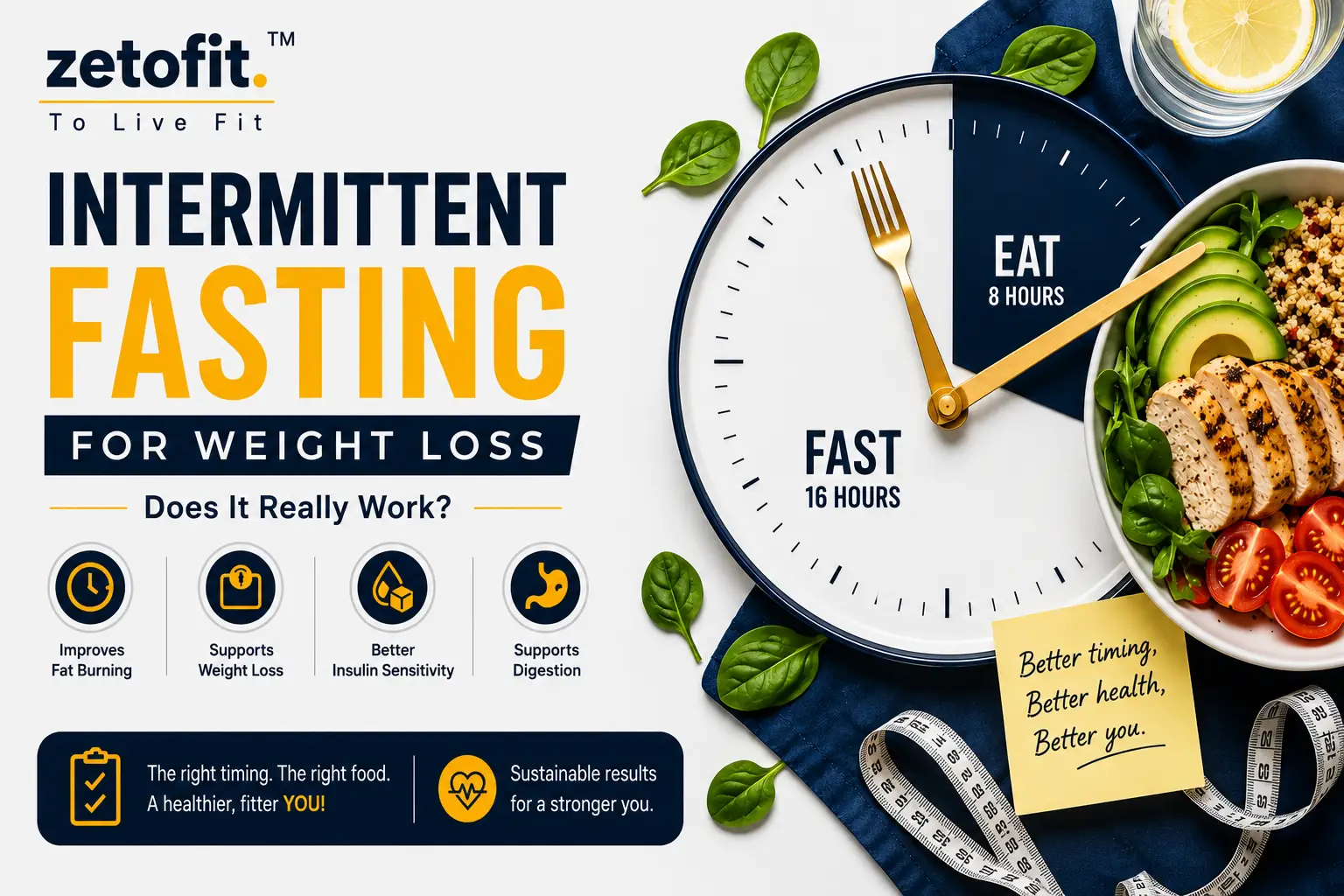
Intermittent fasting has become one of the most popular approaches to weight loss. In this guide, you’ll learn how it works, its benefits, different fasting methods, an Indian meal plan, common mistakes to avoid, and whether it’s the right choice for your health goals.
What is Intermittent Fasting?
Intermittent fasting (IF) isn’t really a diet in the traditional sense — there’s no list of forbidden foods or calories you’re forced to track obsessively. It’s an eating pattern that cycles between windows of eating and windows of fasting, shifting the focus from what you eat to when you eat.
During the fasting window, you consume little to no calories, giving your body a stretch of time where it isn’t constantly processing incoming food. During the eating window, you eat normally — ideally with a bit of intention. That shift alone is why so many people find intermittent fasting easier to stick with long-term compared to restrictive diets.
How Does Intermittent Fasting Work?
When you go several hours without eating, your body moves through a few distinct phases. First, it uses up readily available blood sugar. Once that’s depleted, it starts tapping into stored glycogen, and eventually shifts toward burning stored fat for energy. This metabolic switch is at the core of why fasting windows are linked to fat loss.
Longer fasting periods also give your digestive system a break and may support healthier insulin response — helping your body regulate blood sugar more efficiently over time.
Benefits of Intermittent Fasting
- Reduces calorie intake: A shorter eating window naturally limits how many opportunities you have to eat.
- Improves fat burning: After several fasting hours, your body relies more on stored fat for fuel.
- Supports insulin sensitivity: Regular fasting breaks may help your body respond better to insulin.
- Reduces mindless snacking: A defined eating window curbs late-night snacking and stress-eating.
- Simplifies meal planning: Fewer meals a day can mean less decision fatigue around food.
Popular Types of Intermittent Fasting
16:8 Method
Fast for 16 hours, eat within an 8-hour window — for example, eating between 12 PM and 8 PM. This is the most beginner-friendly method since most of the fasting hours overlap with sleep.
14:10 Method
A gentler starting point: fast for 14 hours and eat within a 10-hour window. Ideal if 16:8 feels too aggressive to start with.
5:2 Method
Eat normally five days a week, then significantly reduce calories on two non-consecutive days. Good for people who don’t want to think about a daily eating window.
Alternate-Day Fasting
Alternate between a normal eating day and a fasting or very low-calorie day. This is a more advanced approach and isn’t recommended for beginners.
Zetofit tip: Most first-timers see the best results — and the least burnout — starting with 12:12 or 14:10 before progressing to 16:8.
Indian Meal Plan During Intermittent Fasting (16:8 Example)
Here’s a simple, practical Indian meal plan built around an 8-hour eating window (12 PM – 8 PM):
| Time | Meal | What to Eat |
|---|---|---|
| 12:00 PM | Break Fast Meal | Moong dal chilla or paneer bhurji with a bowl of salad |
| 2:00 PM | Lunch | 2 multigrain rotis, dal, sabzi, curd, and a side salad |
| 4:30 PM | Evening Snack | Roasted chana, sprouts chaat, or a handful of nuts |
| 7:30 PM | Dinner | Grilled chicken/tofu/paneer with sautéed vegetables and a small portion of rice or roti |
| 8:00 PM – 12:00 PM | Fasting Window | Water, black coffee, or herbal tea only |
Adjust portion sizes based on your calorie needs, activity level, and goals — this plan is a starting template, not a fixed prescription.
Foods to Eat
- Lean protein: eggs, chicken, fish, paneer, tofu
- Whole grains: brown rice, millets, whole wheat
- Fruits and vegetables: for fibre and micronutrients
- Healthy fats: nuts, seeds, avocado, ghee in moderation
- Low-fat dairy: curd, paneer, milk
- Plenty of water throughout the day
What Can You Drink During Fasting?
Most fasting approaches allow:
- Water
- Black coffee (without sugar)
- Green tea
- Black tea
- Herbal tea
Avoid sugary drinks, fruit juices, soft drinks, and milk-based beverages during your fasting window, as these break your fast and reduce its metabolic benefits.
Common Mistakes to Avoid
- Overeating during your eating window
- Skipping protein-rich foods
- Not drinking enough water
- Relying on processed or packaged foods
- Jumping into an overly strict schedule too soon
- Ignoring sleep and exercise
Exercise During Intermittent Fasting
Light to moderate exercise — walking, yoga, or strength training — works well during fasting windows for most people, and some even find they have more energy and mental clarity while fasted. If you’re doing intense or high-volume workouts, it’s usually best to schedule them close to your eating window, so you can refuel with adequate protein and carbs afterward.
Strength training in particular pairs well with intermittent fasting, since it helps preserve lean muscle mass while you’re in a calorie deficit — something cardio alone doesn’t do as effectively.
Who Should Avoid Intermittent Fasting?
Intermittent fasting isn’t right for everyone. Speak with a healthcare professional before trying it if you:
- Are pregnant or breastfeeding
- Have a history of eating disorders
- Take medication for diabetes or other chronic conditions
- Are underweight or have specific medical concerns
Tips for Beginners
- Start with a 12:12 or 14:10 schedule
- Stay hydrated throughout the day
- Eat balanced meals with enough protein and fibre
- Exercise regularly, at an intensity that matches your energy levels
- Be consistent rather than extreme
Myths About Intermittent Fasting
Fasting puts your body into “starvation mode” and slows your metabolism.
Short-term fasting (12–24 hours) doesn’t meaningfully slow metabolism — some research even shows a temporary increase.
You’ll lose muscle mass if you fast.
Combined with adequate protein and strength training, muscle loss is minimal for most healthy adults.
Skipping breakfast is always unhealthy.
For most healthy adults, meal timing matters less than total daily nutrition and calorie balance.
Intermittent fasting works the same way for everyone.
Results vary based on your body, lifestyle, and consistency — it’s one tool, not a guarantee.
Frequently Asked Questions
How long does it take to see results with intermittent fasting?
Most people notice changes in energy and digestion within 1–2 weeks, while visible weight loss typically takes 4–8 weeks with consistent effort and a balanced diet.
Can I drink coffee with milk during my fasting window?
Black coffee without sugar or milk is generally fine. Adding milk introduces calories and protein that can technically break your fast.
Is intermittent fasting safe for beginners?
Yes, for most healthy adults — as long as you start with a gentler schedule like 12:12 or 14:10 and listen to your body as you go.
Will intermittent fasting work without exercise?
You can lose weight through fasting alone by maintaining a calorie deficit, but pairing it with regular movement improves results and helps preserve muscle mass.
What breaks a fast?
Anything with meaningful calories — food, sugary drinks, milk, or juice — breaks a fast. Water, black coffee, and plain tea generally don’t.
Final Thoughts
Intermittent fasting can be an effective weight-loss strategy when combined with a balanced diet, regular physical activity, and healthy lifestyle habits. It isn’t a quick fix or a magic switch — it’s a structured way of eating that, for many people, makes healthy habits easier to maintain consistently.
That said, it isn’t the right approach for everyone, and results depend heavily on your starting point, your consistency, and how well your meals support your goals during the eating window. If you’re still unsure which approach fits your body and lifestyle, working with a nutrition professional can help you build a plan that’s both safe and sustainable — rather than guessing your way through trial and error.
The most effective plan is always the one you can realistically stick to for months, not just days.
Ready to Start Your Weight Loss Journey?
At Zetofit, we help you achieve sustainable results through personalized nutrition guidance, fitness coaching, and lifestyle support.
Zetofit is dedicated to helping individuals achieve sustainable health through personalized nutrition, fitness coaching, and lifestyle transformation. Our evidence-based approach focuses on long-term wellness rather than quick fixes.