
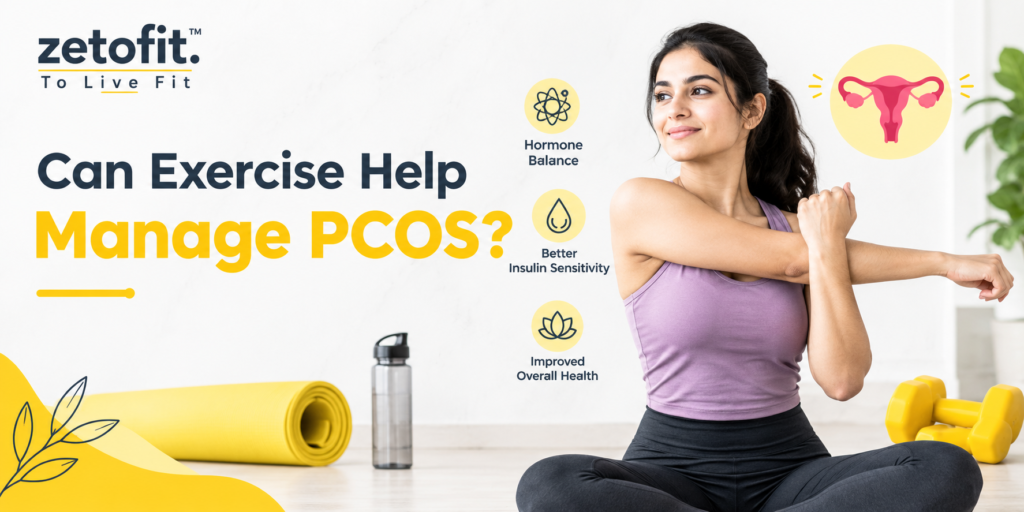
If you have polycystic ovary syndrome (PCOS), you may wonder whether exercise can actually help manage the condition—or whether you need intense workouts to see results.
The answer is yes: regular physical activity can be an important part of PCOS management. Exercise can support metabolic health, fitness, body composition, cardiovascular health, and overall well-being. The international evidence-based PCOS guideline recommends healthy lifestyle management, including physical activity, for women with PCOS.
Importantly, exercise isn’t only about losing weight. You can experience health and fitness benefits even when your weight doesn’t change significantly.
What Is PCOS?
Polycystic ovary syndrome is a common hormonal and metabolic condition that can affect menstrual cycles, ovulation, androgen levels, fertility, skin, and hair growth. It is also associated with metabolic concerns such as insulin resistance.
PCOS can affect people differently, so management should be individualised rather than based on a single treatment or exercise routine.
How Can Exercise Help With PCOS?
Regular physical activity can have several potential benefits.
1. It Can Support Insulin Sensitivity
Insulin resistance is common in PCOS, although it does not affect everyone with the condition. Exercise can help improve the way the body responds to insulin and can support glucose metabolism. The international PCOS guideline identifies exercise as an intervention that can improve insulin resistance and provide potential clinical benefits.
2. It Can Support Weight Management
Weight management can be challenging for some people with PCOS. Regular activity increases energy expenditure and can help support healthy body composition. However, exercise shouldn’t be viewed simply as a way to burn calories.
The goal is to build sustainable habits that support overall health, whether or not weight loss is your primary goal.
3. It Can Help Build and Maintain Muscle
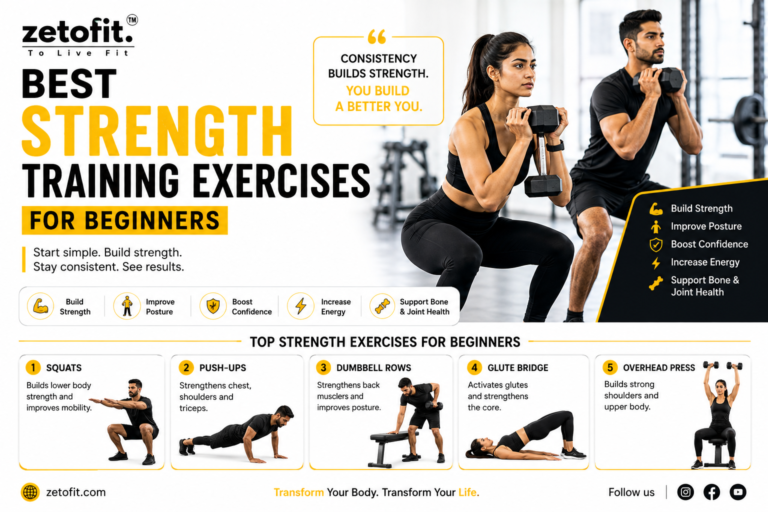
Strength training can help increase muscular strength and maintain lean muscle mass. Exercises such as:
- Squats
- Lunges
- Glute bridges
- Rows
- Push-ups
- Shoulder presses
- Resistance-band exercises
can be incorporated into a beginner-friendly routine.
4. It Supports Cardiovascular Health
People with PCOS can have an increased risk of metabolic and cardiovascular risk factors. Regular physical activity is one part of a healthy lifestyle that supports cardiovascular fitness and overall metabolic health.
Activities such as brisk walking, cycling, swimming, jogging, and dancing can all provide aerobic exercise.
5. It Can Support Mental Well-Being
PCOS can affect emotional well-being and quality of life. Physical activity can be beneficial for general mental health, stress management, sleep, and overall well-being.
The international guideline specifically emphasises emotional well-being and quality of life alongside physical health in PCOS management.
What Is the Best Exercise for PCOS?
There isn’t one exercise that is best for everyone with PCOS.
Current evidence does not establish a single exercise type or intensity as consistently superior for all PCOS outcomes. Instead, the focus should be on regular physical activity that you enjoy and can maintain.
A balanced routine can include:
Walking
Walking is an easy starting point if you’re new to exercise. Try brisk walking outdoors, on a treadmill, or in shorter sessions throughout the day.
Strength Training
Resistance training can help build muscle and improve strength. Aim to train the major muscle groups regularly.
Cycling
Cycling provides aerobic exercise and can be adjusted to suit your fitness level.
Swimming
Swimming is a low-impact option that works multiple muscle groups and may be comfortable for people who don’t enjoy high-impact exercise.
Yoga and Pilates
These can help with flexibility, mobility, balance, and relaxation and can complement aerobic and strength training.
Jogging or Running
If you’re already comfortable with aerobic exercise, jogging or running can be included as a higher-intensity activity.
HIIT
High-intensity interval training can be an option for people who enjoy challenging workouts and have an appropriate fitness base. However, you don’t need HIIT to manage PCOS.
How Much Exercise Should You Do With PCOS?
The international PCOS exercise recommendations align with general physical-activity guidelines.
A practical target is:
150–300 minutes of moderate-intensity aerobic activity per week
or
75–150 minutes of vigorous-intensity aerobic activity per week
or an equivalent combination.
You should also include muscle-strengthening activity on at least two non-consecutive days each week.
For additional health benefits and modest weight loss where appropriate, the guidance suggests approximately
250 minutes of moderate activity or 150 minutes of vigorous activity per week,
together with muscle-strengthening activities.
If you’re currently inactive, don’t feel that you have to reach these numbers immediately.
Start with a manageable amount and gradually increase your activity.
Can Exercise Help With PCOS Without Weight Loss?
Yes.
This is an important point.
Exercise provides benefits beyond the number on the weighing scale. Improvements in fitness, muscle strength, cardiovascular health, metabolic health, and quality of life can occur even when body weight changes little.
The PCOS guideline recommends healthy lifestyle behaviours for women with PCOS regardless of whether weight loss is needed.
So if you’ve been exercising but your weight hasn’t changed, that doesn’t necessarily mean your workouts aren’t helping.
Can Exercise Help With PCOS-Related Insulin Resistance?
Exercise can support insulin sensitivity and glucose metabolism.
Both aerobic exercise and resistance training can be useful components of an active lifestyle. Instead of focusing on one “PCOS workout,” combining different types of activity may make your routine more comprehensive and easier to maintain.
If you have insulin resistance or concerns about blood sugar, discuss your individual exercise and nutrition needs with a healthcare professional.
A Simple Weekly Exercise Plan for PCOS
Here’s an example of a balanced routine:
| Day | Activity |
|---|---|
| Monday | 30-minute brisk walk + strength training |
| Tuesday | 30–40-minute walk or cycling |
| Wednesday | Strength training |
| Thursday | Brisk walk, swimming, or yoga |
| Friday | Strength training + short walk |
| Saturday | Longer walk or another enjoyable activity |
| Sunday | Rest or gentle stretching |
You can adjust the duration and intensity according to your fitness level.
The best plan is one you can follow consistently.
What If You’re a Beginner?
You don’t need to start with a one-hour workout. Begin with small, manageable steps and gradually build your routine.
●
WEEK 1
Start Small and Build Consistency
- 15–20-minute walks
- Two short strength sessions
- Gentle stretching
●
WEEK 2
Increase Your Activity
- Increase your walking duration
- Continue two strength sessions
- Add more everyday movement
●
WEEK 3 ONWARD
Progress at Your Own Pace
- Gradually increase workout duration or intensity
- Continue strength training
- Work toward the recommended weekly activity levels
Starting gradually can make exercise more sustainable and reduce the risk of doing too much too soon.
Should You Exercise Every Day With PCOS?
You can be active every day, but you don’t need to perform intense workouts every day.
For example, you might combine:
- Strength training on two or three days
- Brisk walking on several days
- One longer aerobic session
- Gentle yoga or stretching
- Rest or recovery days
Your routine should allow enough recovery, particularly after demanding strength or high-intensity workouts.
Does Exercise Cure PCOS?
No.
Exercise does not cure PCOS, but it can be an important component of managing the condition and supporting overall health.
PCOS management may also involve nutrition, medications when appropriate, menstrual-cycle management, fertility treatment, and monitoring of metabolic health depending on your individual symptoms and goals.
The international guideline describes lifestyle management as a central part of PCOS care rather than a replacement for appropriate medical treatment.
Common Exercise Mistakes With PCOS
● EXERCISING ONLY TO LOSE WEIGHT
Exercise has benefits beyond weight loss. Focusing exclusively on the scale can make it difficult to recognise other improvements.
● STARTING WITH VERY INTENSE WORKOUTS
You don’t need to begin with HIIT or long workouts. Build your fitness gradually.
● DOING ONLY CARDIO
Include strength training to support muscular strength and lean mass.
● FOLLOWING SOMEONE ELSE’S ROUTINE EXACTLY
PCOS symptoms, fitness levels, preferences, and health needs vary. A routine should be appropriate for you.
● GIVING UP BECAUSE THE SCALE ISN’T MOVING
Changes in fitness, strength, body composition, and metabolic health may not always appear immediately on the scale.
Tips for Staying Consistent
Exercise is more likely to become a long-term habit when it fits your lifestyle.
Try to:
- Choose activities you enjoy.
- Start with realistic goals.
- Schedule workouts around your routine.
- Walk whenever practical.
- Break up long periods of sitting.
- Exercise with a friend if it motivates you.
- Increase activity gradually.
- Track progress beyond body weight.
The PCOS guideline also emphasises individual preferences and sustainable lifestyle behaviours rather than prescribing one universal exercise approach.
When Should You Speak With a Healthcare Professional?
Speak with a healthcare professional before starting or significantly increasing exercise if you have a medical condition, injury, significant physical limitations, or concerns about which activities are appropriate for you.
If you experience symptoms such as chest pain, fainting, severe dizziness, unusual shortness of breath, or significant pain during exercise, stop exercising and seek appropriate medical care.
A qualified exercise professional can also help you safely develop a routine based on your fitness level and goals.
The Bottom Line
Yes, exercise can help manage PCOS.
The most effective approach isn’t necessarily the hardest workout. A combination of aerobic activity, strength training, and regular everyday movement can support metabolic health, fitness, body composition, and overall well-being. Current PCOS guidance does not identify one exercise type as universally best, so choose activities that suit your preferences, abilities, and lifestyle.
Start small, build gradually, and focus on consistency rather than perfection.
For more guidance on nutrition, lifestyle, and PCOS management, explore Zetofit’s
Frequently Asked Questions
Can exercise improve PCOS symptoms?
Exercise can support several aspects of health affected by PCOS, including metabolic health, fitness, body composition, and overall well-being. However, individual responses vary.
Is walking enough for PCOS?
Walking is a useful form of aerobic activity, particularly if you’re starting from a low activity level. For a more complete routine, consider combining walking with strength training.
Is strength training good for PCOS?
Yes. Strength training can improve muscular fitness and support healthy body composition. It is recommended as part of physical activity for people with PCOS.
Do I need to lose weight to benefit from exercise?
No. Exercise can provide health and fitness benefits even without significant weight loss.
Is HIIT necessary for PCOS?
No. HIIT can be included if you enjoy it and it is appropriate for your fitness level, but there is no requirement to perform high-intensity workouts to benefit from exercise.
How long does it take for exercise to help PCOS?
There is no single timeline. Benefits depend on factors such as your starting fitness level, activity type, frequency, nutrition, sleep, and individual health. Consistency over time is more important than expecting immediate changes.
Ready to Start Your Weight Loss Journey?
At Zetofit, we help you achieve sustainable results through personalized nutrition guidance, fitness coaching, and lifestyle support.
📞 +91 93018 55272 ✉️ contact@zetofit.com 🌐 www.zetofit.com
Book Your Consultation →Related Blogs
Intermittent Fasting for Weight Loss: Does It Really Work?
How IF works, its benefits, fasting methods, and beginner tips for sustainable results.
How Much Does a Nutritionist in Pune Charge Per Month
Monthly fees, packages, and what you should expect from a nutritionist in Pune.
How 16:8 Fasting & Intermittent Fasting Helps
Why the scale isn’t moving even when you’re eating less, explained.
About Zetofit
Zetofit is dedicated to helping individuals achieve sustainable health through personalized nutrition, fitness coaching, and lifestyle transformation. Our evidence-based approach focuses on long-term wellness rather than quick fixes.