
You have started exercising regularly. You are putting in the effort, completing your workouts, and trying to stay active. But when you step on the weighing scale, the number has barely changed.
If you are not losing weight despite exercise, it can be frustrating. It may even make you wonder whether your workouts are actually working.
The good news is that a lack of change on the scale does not always mean that your efforts are going to waste.
Your body weight can be affected by food intake, water retention, muscle gain, sleep, stress, daily activity, medications, medical conditions, and other factors. Exercise is an important part of weight management, but it is only one part of the overall picture.
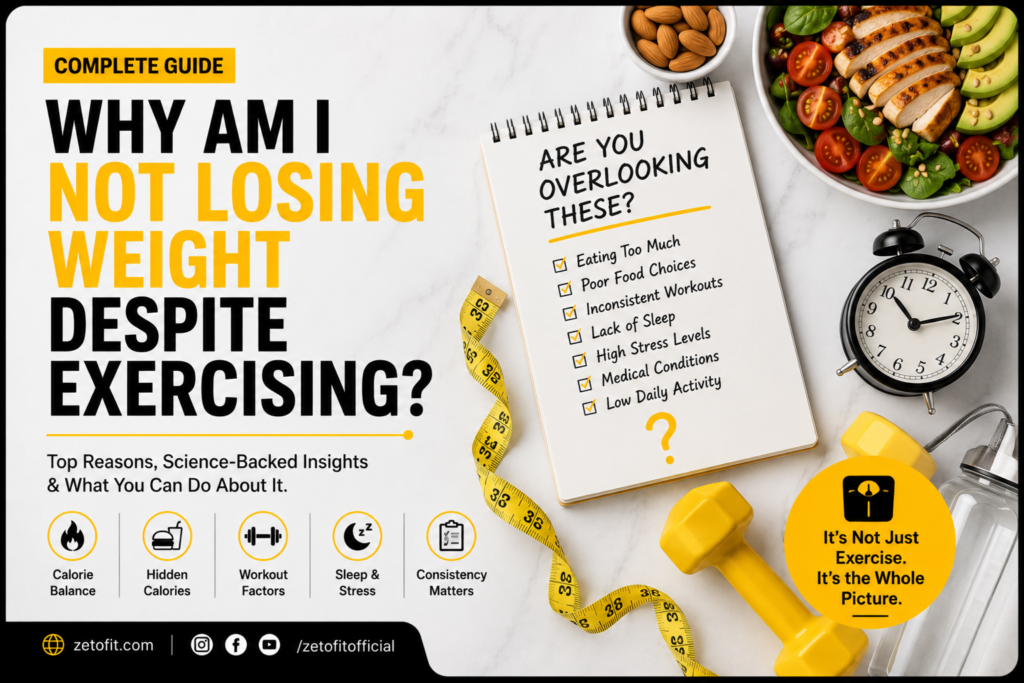
Why Am I Not Losing Weight Despite Exercising?
There are several possible reasons why your weight may not be changing even though you are working out.
Let’s look at the most common ones.
1. You May Be Eating More Calories Than You Realize
One of the most common reasons people don’t lose weight despite exercising is that their overall calorie intake may still be higher than their body needs.
Exercise burns calories, but it is possible to eat those calories back without realizing it.
For example, you might have a healthy workout but then consume:
- A large post-workout meal
- Sugary drinks
- High-calorie coffee
- Extra snacks
- Larger portions
- Frequent weekend meals
- High-calorie sauces or dressings
None of these foods are necessarily “bad,” but portion sizes and total intake matter when your goal is fat loss.
The CDC notes that physical activity increases the calories your body uses, but reducing calorie intake alongside activity contributes to creating the calorie deficit needed for weight loss.
What you can do
Instead of drastically cutting your food, start by understanding what you are actually eating.
For a few days, track your meals, snacks, drinks, and portions. This can help you identify patterns that may otherwise be easy to miss.
2. Your Workout May Not Burn as Many Calories as You Think
Exercise is valuable for much more than calorie burning, but many people overestimate how many calories they burn during a workout.
A one-hour workout does not necessarily cancel out several high-calorie meals or snacks.
For example, a workout may leave you feeling hungry, leading you to eat more afterward. You may also become less active during the rest of the day because you feel tired from exercising.
This does not mean you should stop exercising.
Instead, look at your overall daily activity rather than judging your progress based on your workout alone.
Walking, household activities, taking the stairs, standing more, and other everyday movements can all contribute to your total activity.
3. You May Be Gaining Muscle
If you have recently started strength training, your body composition may be changing even if your weight is not.
You could be losing some body fat while gaining or maintaining muscle.
Because of this, the weighing scale may not show the full picture.
Look at other signs of progress, such as:
- Waist measurement
- Body measurements
- Progress photos
- How your clothes fit
- Strength levels
- Workout performance
- Energy levels
If your waist is getting smaller and your strength is improving, the lack of a major change on the scale does not necessarily mean that your training is ineffective.
Can You Lose Fat Without Losing Weight?
Yes.
This can happen when you lose body fat while maintaining or gaining muscle.
For example, your weight may remain around the same while:
- Your waist measurement decreases
- Your clothes fit better
- Your strength improves
- Your body looks more defined
- Your body-fat percentage decreases
This is sometimes referred to as body recomposition. It is one reason why progress should not be measured using body weight alone.
4. Water Weight Can Hide Fat Loss
Your body weight naturally fluctuates.
Changes in hydration, sodium intake, carbohydrate intake, digestion, exercise, and other factors can temporarily affect the number on the scale.
This means you may be losing body fat while holding extra water at the same time.
For this reason, comparing your weight from one day to another can be misleading.
Instead, weigh yourself consistently and look at the trend over several weeks.
5. You May Not Be Consistent Enough Yet
You may exercise regularly during the week but still struggle with consistency across your overall routine.
For example:
Monday–Friday:
Workout regularly and eat carefully.
Saturday–Sunday:
Eat out, have extra snacks, drink sugary beverages, and reduce activity.
This can make your overall weekly calorie intake much higher than expected.
Weight management is influenced by your overall pattern, not just what you do during a few workouts.
Try to focus on habits that you can maintain throughout the week.
6. Your Daily Activity Outside the Gym May Be Low
Going to the gym does not automatically mean you are physically active for the rest of the day.
If you exercise for one hour but spend most of the remaining day sitting, your overall activity may still be relatively low.
Try adding more movement throughout the day.
You can:
- Take short walking breaks
- Walk after meals
- Use stairs when practical
- Walk while talking on the phone
- Do household activities
- Take an evening walk
- Increase your daily steps gradually
These small changes can make your overall routine more active.
7. You May Need to Reconsider Your Workout Routine
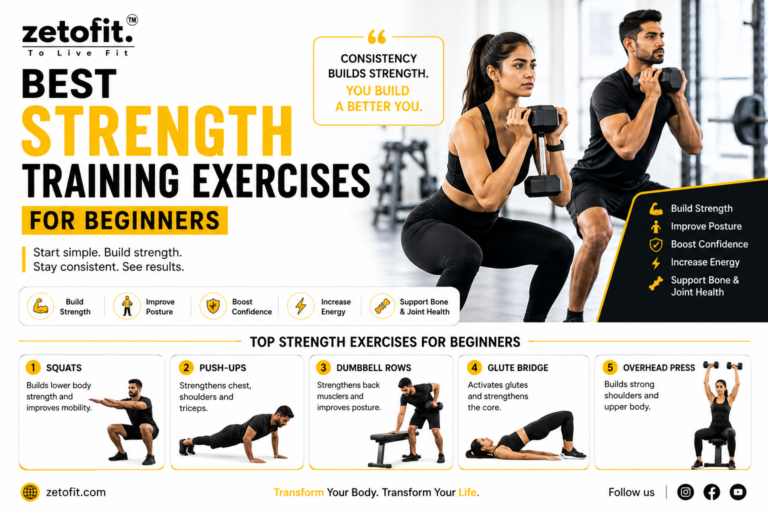
Strength Training
Resistance training can help build and maintain muscle while improving overall fitness. Examples include:- Squats
- Lunges
- Rows
- Push-ups
- Presses
- Deadlifts
- Resistance-band exercises
Cardio
Walking, cycling, swimming, jogging, and other cardiovascular activities can help increase physical activity and improve fitness. For general health, adults are advised to get at least 150 minutes of moderate-intensity aerobic activity each week and muscle-strengthening activity on at least two days per week. The right amount of exercise for weight management varies between individuals.8. You May Not Be Eating Enough Protein
Protein is important for maintaining and building muscle.
If your diet is low in protein while you are exercising regularly, you may find it harder to maintain muscle during fat loss.
Include suitable protein sources throughout your day, such as:
- Eggs
- Paneer
- Greek yogurt
- Milk
- Chicken
- Fish
- Tofu
- Soy
- Lentils
- Beans
Your individual protein requirements depend on your body, activity level, age, health, and goals.
9. Your Sleep May Be Affecting Your Progress
Exercise and nutrition often get most of the attention, while sleep is ignored.
Not getting enough sleep can affect hunger, food choices, energy, and your ability to maintain healthy habits. The NIDDK notes that insufficient sleep is linked with weight gain and may increase hunger and calorie intake.
Try to maintain a regular sleep schedule and aim for adequate sleep each night.
If you are exercising hard but sleeping poorly, improving your recovery may be an important part of your overall weight-management strategy.
10. Stress May Be Making Things More Difficult
Long-term stress can affect your eating habits, sleep, energy, and consistency.
Some people eat more when stressed. Others may skip workouts, sleep poorly, or rely on convenient foods.
This does not mean stress automatically prevents weight loss, but it can make healthy habits more difficult to maintain.
Try to build simple stress-management habits into your routine, such as:
- Walking
- Breathing exercises
- Meditation
- Hobbies
- Spending time with friends or family
- Taking regular breaks
- Maintaining a consistent sleep schedule
11. You May Be Expecting Results Too Quickly
Weight loss does not happen at exactly the same speed for everyone.
Your starting weight, age, diet, activity level, genetics, sleep, medications, health conditions, and other factors can influence your progress.
Instead of expecting dramatic changes within a few days, focus on the trend over time.
Small improvements that you can maintain are often more useful than extreme changes that only last for a short period.
12. Your Weight May Be Stable While Your Body Composition Improves
Sometimes the scale stays the same because your body is changing in other ways.
For example:
Before:
70 kg body weight + higher body-fat percentage
Later:
70 kg body weight + lower body-fat percentage + better muscle mass
The scale shows no change, but your body composition may have improved.
This is why weight should be considered alongside measurements such as waist circumference, body composition, strength, and how your clothes fit.
Should You Stop Exercising If You're Not Losing Weight?
No.
Exercise provides benefits beyond weight loss. Regular physical activity can support cardiovascular health, muscle and bone strength, sleep, mood, and overall physical function.
If the scale is not moving, the better question is:
What part of my overall routine needs to be adjusted?
Look at your:
- Food intake
- Portion sizes
- Daily movement
- Workout routine
- Sleep
- Stress
- Recovery
- Consistency
You may not need to exercise more. You may simply need to make your nutrition or daily activity more consistent.
What Should You Do If You're Not Losing Weight?
Instead of making several major changes at once, start with a simple review.
Step 1: Track Your Food
Record everything you eat and drink for several days.
Look for:
- Portion sizes
- Snacks
- Sugary drinks
- Weekend eating
- Restaurant meals
- High-calorie additions
Step 2: Track Your Activity
Record your workouts and general daily movement.
Don’t just record your gym sessions. Look at how active you are throughout the entire day.
Step 3: Track Your Weight Consistently
Use similar conditions when weighing yourself.
Rather than focusing on individual numbers, look for the longer-term trend.
Step 4: Measure Your Waist
Your waist measurement can provide another useful indicator of changes in body composition.
Step 5: Review Your Training
Make sure your routine includes both strength training and cardiovascular activity appropriate for your fitness level.
Step 6: Review Your Sleep
Look at how many hours you are sleeping and whether your sleep schedule is consistent.
Step 7: Give Your Plan Time
Avoid changing yo ur entire routine every few days.
Consistency gives you a better opportunity to understand whether your approach is working.
When Should You Speak to a Healthcare Professional?
If you have been consistently following a healthy eating and exercise routine but are experiencing unexpected weight gain or persistent difficulty losing weight, it may be worth speaking with a healthcare professional.
Certain medications, medical conditions, hormonal factors, age, genetics, sleep, and other factors can affect weight management.
A healthcare professional can help determine whether there is an underlying factor that needs attention.
How a Structured Weight Loss Approach Can Help
Sometimes the biggest problem isn’t knowing what to do. It’s knowing how to put everything together.
A structured approach can help you understand:
- What to eat
- How much to eat
- How to structure your workouts
- How much activity you need
- How to monitor progress
- When to adjust your routine
- How to build habits you can maintain
If you need professional support with your goals, you can explore the ZetoFit Weight Loss Program for a more structured approach to nutrition and fitness.
Final Thoughts
If you’re not losing weight despite exercise, don’t assume that your workouts are failing.
Exercise is only one part of the weight-loss equation.
Your nutrition, daily activity, sleep, stress, recovery, consistency, muscle mass, and individual circumstances can all influence what happens on the scale.
Start by looking at the bigger picture rather than simply adding more workouts.
Focus on a balanced eating pattern, regular strength and cardiovascular training, adequate sleep, daily movement, and habits that you can maintain over time.
And remember: progress is not always reflected by the number on the scale.
Frequently Asked Questions
Why am I not losing weight despite exercising every day?
Exercising every day does not guarantee weight loss. Your total calorie intake, daily movement, sleep, stress, muscle gain, water fluctuations, medications, and other factors can affect your weight.
Why am I exercising but gaining weight?
Temporary increases in water weight, muscle gain, increased food intake, or changes in your routine can cause the scale to increase. If the change is persistent or unexpected, consider discussing it with a healthcare professional.
Can I lose fat without losing weight?
Yes. If you lose body fat while maintaining or gaining muscle, your body composition can improve even when your total body weight changes very little.
How long should I exercise before expecting weight-loss results?
There is no fixed timeline that applies to everyone. Focus on consistency and look at changes over several weeks rather than expecting the scale to change after every workout.
Is exercise enough to lose weight?
Exercise is important, but nutrition also plays a major role. The CDC notes that weight loss generally involves both physical activity and managing calorie intake.
Should I eat less if I am not losing weight?
Not necessarily. Before significantly reducing your food intake, review your portions, food choices, activity, sleep, and overall routine. If you are unsure about your nutritional needs, consider working with a qualified nutrition professional.
What is the best exercise for weight loss?
There is no single best exercise for everyone. A combination of strength training, cardiovascular activity, and regular daily movement can provide a balanced approach. Choose activities that suit your fitness level and that you can perform consistently.
When should I consider a weight loss program?
If you have been struggling to make progress on your own, a structured Weight Loss Program can provide guidance, accountability, nutrition support, exercise planning, and progress tracking.
Ready to Start Your Weight Loss Journey?
At Zetofit, we help you achieve sustainable results through personalized nutrition guidance, fitness coaching, and lifestyle support.
📞 +91 93018 55272 ✉️ contact@zetofit.com 🌐 www.zetofit.com
Book Your Consultation →Related Blogs
Intermittent Fasting for Weight Loss: Does It Really Work?
How IF works, its benefits, fasting methods, and beginner tips for sustainable results.
How Much Does a Nutritionist in Pune Charge Per Month
Monthly fees, packages, and what you should expect from a nutritionist in Pune.
How 16:8 Fasting & Intermittent Fasting Helps
Why the scale isn’t moving even when you’re eating less, explained.
About Zetofit
Zetofit is dedicated to helping individuals achieve sustainable health through personalized nutrition, fitness coaching, and lifestyle transformation. Our evidence-based approach focuses on long-term wellness rather than quick fixes.