
If you’re working out regularly and trying to build muscle, protein is one of the most important nutrients to get right. But how much protein do you actually need?
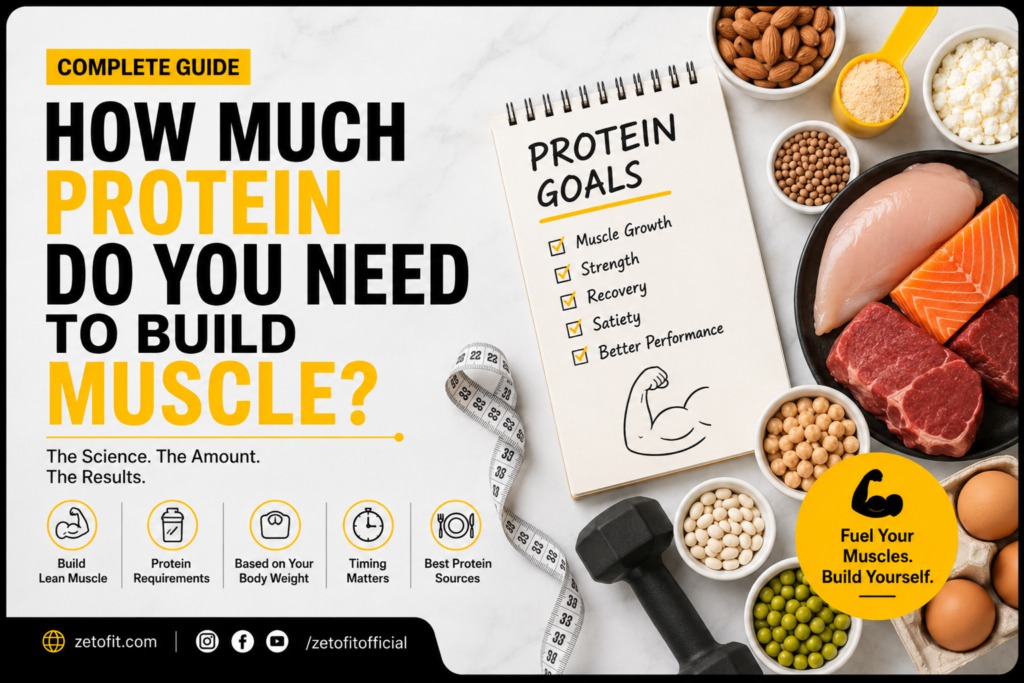
You may have heard everything from “you need 1 gram per pound” to “more protein is always better.” The reality is more practical: for most people who exercise regularly, around 1.4–2.0 grams of protein per kilogram of body weight per day is a well-supported range for building and maintaining muscle.
However, your ideal intake can depend on your body weight, training routine, diet, age, and whether you are trying to gain muscle, maintain muscle, or lose body fat.
Why Is Protein Important for Muscle Building?
Your muscles are constantly undergoing a cycle of breakdown and repair. Resistance training creates a stimulus for your muscles to adapt, while dietary protein provides the amino acids your body uses to repair and build muscle tissue.
Both resistance exercise and protein intake stimulate muscle protein synthesis—the process involved in repairing and building muscle. Consuming adequate protein alongside resistance training can therefore support muscle growth and recovery.
But protein alone won’t build significant muscle. A combination of progressive resistance training, adequate nutrition, recovery, and sufficient protein is important.
How Much Protein Do You Need to Build Muscle?
For most people who regularly exercise, a daily intake of approximately:
1.4–2.0 g of protein per kg of body weight
is sufficient for building and maintaining muscle.
Here’s what that looks like:
| Body Weight | Approx. Protein Range/Day |
|---|---|
| 50 kg | 70–100 g |
| 60 kg | 84–120 g |
| 70 kg | 98–140 g |
| 80 kg | 112–160 g |
| 90 kg | 126–180 g |
| 100 kg | 140–200 g |
You don’t necessarily need to aim for the top of the range. For many people doing regular resistance training, around 1.6 g/kg/day is a practical target supported by research. A large meta-analysis found that increases in muscle and strength from protein supplementation generally plateaued around this intake during resistance training.
Is More Protein Always Better?
Not necessarily.
Once you are consuming enough protein to support your training and recovery, simply adding more protein is unlikely to produce proportionally greater muscle growth.
For most exercising individuals, 1.4–2.0 g/kg/day is already a sufficient range. Higher intakes may have a role in specific situations, such as resistance-trained people dieting in a calorie deficit, where preserving lean mass becomes especially important.
The goal shouldn’t be to consume as much protein as possible. Instead, focus on getting enough protein consistently while maintaining a balanced diet.
How Much Protein Should You Eat Per Meal?
Your total protein intake for the day is important, but how you distribute that protein can also help.
A commonly recommended amount is approximately 20–40 grams of high-quality protein per meal, depending on body size and individual needs. The ISSN position stand also suggests distributing protein intake relatively evenly throughout the day, with meals spaced roughly 3–4 hours apart.
For example, someone aiming for 120 g of protein per day could divide it approximately like this:
- Breakfast: 25–30 g
- Lunch: 30 g
- Snack: 20–25 g
- Dinner: 30–35 g
This can be easier than trying to consume most of your protein in one large meal.
Should You Eat Protein Before or After a Workout?
Both pre- and post-workout protein can support muscle protein synthesis when combined with resistance exercise. You don’t need to worry about consuming protein within a very narrow “anabolic window.” The effects of resistance exercise on muscle protein synthesis can continue for many hours.
A practical approach is to have a protein-containing meal or snack before or after your workout based on what fits comfortably into your routine.
For example:
Before training:
- Greek yogurt with fruit
- Milk or soy milk
- Paneer with a meal
- Eggs, for those who eat them
- Tofu or soy-based foods
After training:
- Paneer or tofu
- Greek yogurt or curd
- Milk
- Eggs
- Dal with another protein source
- Whey or another protein supplement if convenient
Best Protein Sources for Muscle Building
Animal-Based Protein Sources
If included in your diet, options include:- Eggs
- Chicken
- Fish
- Lean meat
- Milk
- Greek yogurt
- Curd
- Cottage cheese
Vegetarian Protein Sources
For vegetarians, good choices include:- Paneer
- Tofu
- Soy chunks
- Tempeh
- Milk
- Greek yogurt
- Curd
- Lentils
- Chickpeas
- Kidney beans
- Other beans and legumes
- Peas
- Nuts and seeds
Do You Need Protein Powder to Build Muscle?
No.
Protein powder is a convenient food supplement, not a requirement for muscle growth. You can meet your protein needs through whole foods if your diet is well planned.
However, protein powder can be useful if you struggle to get enough protein from regular meals, have a busy schedule, or need an easy post-workout option.
Whey, casein, soy, and other protein powders can all be convenient ways to increase your daily protein intake.
The important thing is to look at your total daily protein intake, rather than assuming a supplement will automatically produce better results.
What Happens If You Don’t Eat Enough Protein?
If your protein intake is consistently too low while you’re training, your body may have fewer amino acids available to support muscle repair and adaptation.
You may also find it harder to maintain muscle when you’re eating in a calorie deficit.
This is particularly important if your goal is fat loss while preserving muscle. Resistance training combined with adequate protein can help support lean mass during weight loss.
Protein for Muscle Gain vs. Fat Loss
Your protein needs may look slightly different depending on your goal.
If Your Goal Is Muscle Gain
Aim for approximately 1.4–2.0 g/kg/day, alongside a structured resistance-training program and adequate overall calorie intake.
If Your Goal Is Fat Loss
Protein becomes particularly useful because maintaining adequate protein intake can help support lean muscle while you are reducing calories.
Resistance-trained individuals in a calorie deficit may sometimes benefit from higher protein intakes, depending on factors such as body composition and the size of the calorie deficit.
Common Protein Mistakes to Avoid
1. Focusing only on protein
Protein matters, but carbohydrates, fats, vitamins, minerals, fibre, and overall calorie intake also contribute to a healthy diet and effective training.2. Eating almost all your protein at dinner
Try distributing protein across your meals instead of leaving most of it for one meal.3. Depending entirely on protein shakes
Supplements can be convenient, but whole foods provide other important nutrients as well.4. Assuming more protein means faster muscle growth
Once you are meeting your protein needs, adding substantially more isn’t guaranteed to produce additional muscle.5. Forgetting resistance training
Protein works best as part of a complete muscle-building strategy. Resistance training provides the stimulus your muscles need to adapt.A Simple Formula to Calculate Your Protein Needs
A simple starting point is:
Body weight in kg × 1.6 = approximate daily protein target
For example, if you weigh 70 kg:
70 × 1.6 = 112 g protein per day
You could then adjust your intake within the broader 1.4–2.0 g/kg range depending on your training, goals, diet, and individual circumstances.
Final Takeaway
You don’t need an extreme amount of protein to build muscle.
For most people who exercise regularly, 1.4–2.0 g of protein per kilogram of body weight per day is a well-supported range, with around 1.6 g/kg/day being a practical target for many people doing resistance training. (
Focus on getting enough protein consistently, spread it across your meals, choose a variety of high-quality protein sources, and combine your nutrition with progressive strength training and adequate recovery.
For more guidance on nutrition, strength training, and building muscle, explore Zetofit’s muscle-building resources.
Ready to Start Your Weight Loss Journey?
At Zetofit, we help you achieve sustainable results through personalized nutrition guidance, fitness coaching, and lifestyle support.
📞 +91 93018 55272 ✉️ contact@zetofit.com 🌐 www.zetofit.com
Book Your Consultation →Related Blogs
Intermittent Fasting for Weight Loss: Does It Really Work?
How IF works, its benefits, fasting methods, and beginner tips for sustainable results.
How Much Does a Nutritionist in Pune Charge Per Month
Monthly fees, packages, and what you should expect from a nutritionist in Pune.
How 16:8 Fasting & Intermittent Fasting Helps
Why the scale isn’t moving even when you’re eating less, explained.
About Zetofit
Zetofit is dedicated to helping individuals achieve sustainable health through personalized nutrition, fitness coaching, and lifestyle transformation. Our evidence-based approach focuses on long-term wellness rather than quick fixes.