
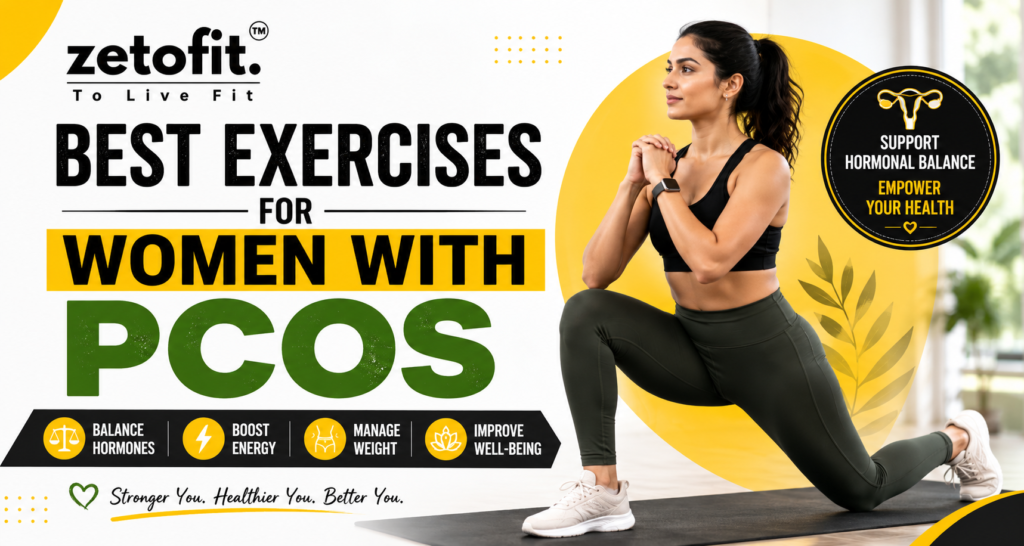
Exercise can be an important part of managing polycystic ovary syndrome (PCOS). Regular physical activity can support metabolic health, fitness, body composition, and overall well-being.
But if you have PCOS, you don’t need to follow an extreme workout routine or choose one specific type of exercise. The 2023 International Evidence-Based PCOS Guideline found that there isn’t enough evidence to say one type or intensity of exercise is consistently better than another for hormonal, metabolic, reproductive, psychological, or weight-related outcomes. Instead, the focus should be on regular, sustainable activity that fits your preferences and goals.
So, what are the best exercises for PCOS? The answer is the exercises you can do consistently while combining aerobic activity, strength training, and everyday movement.
How Can Exercise Help With PCOS?
PCOS is associated with metabolic health concerns, including insulin resistance in many—but not all—people with the condition.
Regular physical activity can help support:
- Cardiovascular fitness
- Muscle strength
- Metabolic health
- Body composition
- Weight management
- Overall physical fitness
- Quality of life
The international PCOS guideline recommends lifestyle management, including physical activity, for women with PCOS to support general health, body composition, and weight management.
Importantly, the benefits of exercise aren’t dependent on losing weight. You can improve your fitness and metabolic health even when the number on the scale doesn’t change significantly.
Best Exercises for PCOS
There is no single “best PCOS exercise.” A combination of different types of movement can make your routine more balanced and sustainable.
1. Brisk Walking
Walking is one of the easiest ways to increase physical activity, especially if you’re new to exercise.
Try:
- Brisk outdoor walks
- Walking on a treadmill
- Walking after meals
- Short walks throughout the day
You don’t need to start with long sessions. Begin with a manageable duration and gradually increase your activity.
Beginner goal: 20–30 minutes of brisk walking on most days.
Walking can also be useful if you spend a lot of time sitting during work. Breaking up prolonged sedentary time with movement is encouraged in PCOS guidelines.
2. Strength Training
Resistance training is an excellent addition to a PCOS exercise routine.
It can help you build and maintain muscle while improving overall physical strength.
Beginner-friendly exercises include:
- Squats
- Lunges
- Glute bridges
- Rows
- Shoulder presses
- Chest presses
- Resistance-band exercises
- Deadlift variations
You don’t necessarily need a gym. Bodyweight exercises, resistance bands, and basic weights can all be used.
The PCOS guideline recommends muscle-strengthening activities on at least two non-consecutive days per week.
3. Cycling
Cycling is a low-impact aerobic activity that can be performed indoors or outdoors.
You can adjust the intensity according to your fitness level.
For beginners, start with comfortable cycling and gradually increase the duration or resistance as your fitness improves.
4. Swimming
Swimming and water-based exercise can provide a full-body workout while placing relatively little impact on the joints.
It can be particularly useful if you don’t enjoy traditional gym workouts or find high-impact exercises uncomfortable.
5. Jogging or Running
If your fitness level allows it, jogging or running can be an effective form of vigorous aerobic exercise.
However, you don’t need to run to manage PCOS.
If you’re new to exercise, start with walking and gradually introduce short jogging intervals.
6. Pilates
Pilates can help improve core strength, flexibility, balance, and body awareness.
It can be a useful option if you prefer lower-impact workouts or want to complement your strength and aerobic training.
7. Yoga
Yoga can be incorporated into a broader exercise routine to support flexibility, mobility, balance, and relaxation.
It’s not necessary to rely on yoga alone for your fitness goals, but it can be a valuable part of an overall active lifestyle.
8. HIIT
High-intensity interval training (HIIT) involves alternating short periods of harder activity with recovery periods.
For example:
- 30 seconds of faster cycling
- 60–90 seconds of easy cycling
- Repeat several times
HIIT may be suitable for people who already have a good fitness base, but it isn’t necessary for everyone with PCOS.
Research comparing HIIT, moderate-intensity exercise, and resistance training in PCOS has not established that one approach is clearly superior overall.
If you’re a beginner, there’s no need to jump straight into high-intensity workouts.
How Much Exercise Do You Need for PCOS?
For adults with PCOS, the international guideline recommends following general physical-activity targets.
For maintaining health and preventing weight gain, aim for:
150–300 minutes of moderate-intensity aerobic activity per week
or
75–150 minutes of vigorous-intensity aerobic activity per week
or an equivalent combination.
You should also include muscle-strengthening exercise on at least two non-consecutive days per week.
For additional health benefits, modest weight loss, or prevention of weight regain, the guideline suggests aiming for approximately:
250 minutes of moderate activity per week
or
150 minutes of vigorous activity per week
along with muscle-strengthening activities.
These are targets—not requirements you have to reach immediately.
If you’re currently inactive, start small and build up gradually.
A Simple Weekly PCOS Workout Plan
Here’s an example of how you could combine different forms of exercise:
| Day | Activity |
|---|---|
| Monday | Strength training + short walk |
| Tuesday | 30–40 minute brisk walk |
| Wednesday | Strength training |
| Thursday | Cycling, swimming, or brisk walking |
| Friday | Strength training + easy walk |
| Saturday | Longer walk or another enjoyable activity |
| Sunday | Rest, stretching, or gentle movement |
You can adjust the plan according to your fitness level, schedule, preferences, and goals.
The most important thing is consistency.
What If Your Main Goal Is Weight Loss?
If weight management is one of your goals, combining aerobic activity with strength training can be a practical approach.
Aerobic exercise increases overall physical activity, while strength training helps build and maintain muscle.
However, exercise should not be viewed simply as a way to “burn calories.” Physical activity provides benefits beyond the number of calories burned.
The PCOS guideline recommends healthy lifestyle behaviours for body composition and weight management, including maintaining weight, preventing weight gain, and supporting modest weight loss where appropriate.
Nutrition also plays an important role in weight management, so exercise works best as part of an overall healthy lifestyle.
Should You Exercise Every Day With PCOS?
You can be physically active every day, but that doesn’t mean every day needs to be a hard workout.
For example:
- Monday: Strength training
- Tuesday: Walking
- Wednesday: Strength training
- Thursday: Easy cycling
- Friday: Strength training
- Saturday: Walking or swimming
- Sunday: Gentle stretching or rest
Your routine should include easier days and allow your body to recover from demanding workouts.
What If You Are New to Exercise?
Start with activities that feel manageable.
A beginner could begin with:
Week 1–2
- 15–20 minute walks
- 2 short strength-training sessions
- Gentle stretching or mobility
Week 3–4
- Increase walking duration
- Continue strength training twice per week
- Add another aerobic session if comfortable
Then gradually increase your activity as your fitness improves.
The PCOS guideline specifically recommends sustainable physical activity based on individual preferences and goals rather than a one-size-fits-all exercise prescription.
Do You Need a Gym to Exercise With PCOS?
No.
You can exercise at home, outdoors, in a community setting, or at a gym.
A home routine could include:
- Bodyweight squats
- Glute bridges
- Wall or incline push-ups
- Lunges
- Resistance-band rows
- Planks
- Brisk walking
The international guideline notes that exercise interventions do not require expensive gyms or specialised facilities and can be performed with minimal equipment.
Common Exercise Mistakes to Avoid With PCOS
Doing Only Cardio
Cardio is beneficial, but don’t overlook strength training. Include muscle-strengthening exercises at least twice a week.
Believing HIIT Is the Only Effective Workout
You don’t have to perform HIIT to benefit from exercise. Current evidence doesn’t establish one exercise type as universally superior for PCOS.
Exercising Too Intensely From the Start
More isn’t always better. Starting with manageable workouts can make it easier to stay consistent and reduce the risk of injury.
Focusing Only on Weight Loss
Weight is only one measure of health. Fitness, strength, metabolic health, energy, and quality of life also matter.
Sitting for Long Periods Outside Your Workout
A 30-minute workout doesn’t completely offset spending the rest of the day sitting. Try to add movement throughout your day.
Tips to Make Exercise Easier to Maintain
Choose activities you actually enjoy.
You can also:
- Schedule workouts at a convenient time.
- Start with short sessions.
- Walk with a friend or family member.
- Track your activity if it motivates you.
- Gradually increase your exercise.
- Set realistic weekly goals.
- Include activities you enjoy outside the gym.
The goal isn’t to find the “perfect” PCOS workout. It’s to build an active lifestyle you can maintain.
When Should You Speak With a Healthcare Professional?
Talk to a healthcare professional before significantly increasing exercise if you have a medical condition, an injury, significant physical limitations, or concerns about which activities are appropriate for you.
If you experience chest pain, fainting, severe dizziness, unusual shortness of breath, or significant pain during exercise, stop exercising and seek appropriate medical attention.
A qualified exercise professional can also help you develop an appropriate routine if you’re unsure how to begin.
The Bottom Line
The best exercises for PCOS are not necessarily the hardest ones.
Walking, strength training, cycling, swimming, jogging, Pilates, yoga, and other activities can all be part of a healthy exercise routine. Current PCOS guidance does not identify one exercise type as universally superior, so choosing activities that fit your preferences, fitness level, and lifestyle is key.
Start where you are, increase your activity gradually, include strength training at least twice a week, and aim to reduce long periods of sitting.
For more guidance on nutrition, lifestyle, and PCOS management, explore Zetofit’s
Frequently Asked Questions
What is the best exercise for PCOS?
There isn’t one exercise proven to be best for everyone with PCOS. A combination of aerobic activity and muscle-strengthening exercise is a practical approach, based on your individual preferences and goals.
Is walking good for PCOS?
Yes. Walking is a simple form of aerobic activity and can help you increase your overall physical activity. It can be especially useful if you’re new to exercise.
Is strength training good for PCOS?
Yes. Strength training can help improve muscular fitness and body composition and is recommended as part of physical activity guidelines for people with PCOS.
Is HIIT good for PCOS?
HIIT can be included in a PCOS exercise routine if it’s appropriate for your fitness level, but it isn’t essential. Current evidence doesn’t show that one exercise modality is consistently superior for all PCOS outcomes.
How often should women with PCOS exercise?
A general target is 150–300 minutes of moderate aerobic activity or 75–150 minutes of vigorous activity per week, plus muscle-strengthening exercise on at least two non-consecutive days.
Ready to Start Your Weight Loss Journey?
At Zetofit, we help you achieve sustainable results through personalized nutrition guidance, fitness coaching, and lifestyle support.
📞 +91 93018 55272 ✉️ contact@zetofit.com 🌐 www.zetofit.com
Book Your Consultation →Related Blogs
Intermittent Fasting for Weight Loss: Does It Really Work?
How IF works, its benefits, fasting methods, and beginner tips for sustainable results.
How Much Does a Nutritionist in Pune Charge Per Month
Monthly fees, packages, and what you should expect from a nutritionist in Pune.
How 16:8 Fasting & Intermittent Fasting Helps
Why the scale isn’t moving even when you’re eating less, explained.
About Zetofit
Zetofit is dedicated to helping individuals achieve sustainable health through personalized nutrition, fitness coaching, and lifestyle transformation. Our evidence-based approach focuses on long-term wellness rather than quick fixes.