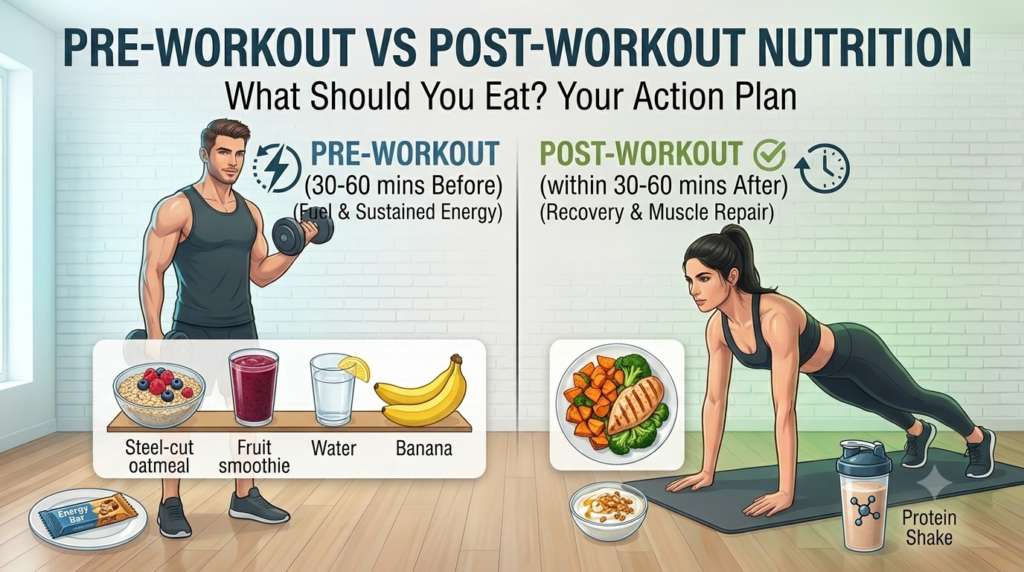
What you eat around your workout can make a difference in how you feel during exercise and how well you recover afterward.
But pre-workout and post-workout nutrition have different purposes. A meal before exercise can provide energy for your session, while food after exercise can help replenish energy and provide nutrients needed for recovery.
You don’t need complicated supplements or expensive foods to get these benefits. A simple combination of carbohydrates, protein, healthy fats, fluids, and whole foods can work well for many people.
In this guide, we’ll look at what to eat before a workout, what to eat after a workout, when to eat, and how to choose meals based on your workout and goals.
What Is Pre-Workout Nutrition?
Pre-workout nutrition refers to the food and fluids you consume before exercising.
The main purpose is to provide your body with enough energy to complete the workout comfortably. The right meal or snack can also help prevent hunger during exercise.
Your ideal pre-workout meal depends on:
- The type of workout
- Workout duration
- Workout intensity
- Time available before exercising
- Your individual digestion
- Your fitness goal
- Your usual eating pattern
You don’t necessarily need a large meal before every workout.
For a short or light workout, a normal meal eaten a few hours earlier may be enough.
Why Is Pre-Workout Nutrition Important?
Exercise requires energy. Carbohydrates are an important source of fuel, particularly for moderate- to high-intensity exercise.
Eating before exercise can help you start your workout with adequate energy rather than exercising while extremely hungry.
A useful pre-workout meal usually contains:
- Carbohydrates for energy
- Some protein to support your overall protein intake
- Fluids to support hydration
- A moderate amount of fat depending on how close you are to exercising
The meal doesn’t have to be complicated.
For example:
Banana + yogurt
or
Oats + milk + fruit
can be simple options before a workout.
What Should You Eat Before a Workout?
The best pre-workout food depends largely on how much time you have before exercising.
If You Have 2–3 Hours Before Your Workout
You have more time to digest a proper meal.
A balanced meal could include:
| Food Group | Examples |
|---|---|
| Carbohydrates | Rice, oats, potatoes, whole-grain bread |
| Protein | Eggs, paneer, curd, chicken, tofu |
| Fruit | Banana, apple, berries, orange |
| Vegetables | Cooked vegetables or salad |
| Fluids | Water |
Example Meals
- Rice + dal + vegetables + curd
- Oats + milk + banana + nuts
- Roti + paneer + vegetables
- Chicken + rice + vegetables
- Potato + eggs + vegetables
Keep the portion appropriate for your appetite and workout.
If You Have 1–2 Hours Before Exercise
When you have less time, a smaller and easier-to-digest meal may be more comfortable.
Some options include:
- Banana + curd
- Oats + milk
- Toast + eggs
- Fruit + yogurt
- Banana + peanut butter
- Small bowl of poha
- Smoothie with fruit and yogurt
Avoid eating a very large meal immediately before exercise if it makes you feel heavy or uncomfortable.
If You Have Only 30–60 Minutes
When your workout is approaching quickly, choose something light.
Good options may include:
- Banana
- A small fruit smoothie
- Toast
- Dates
- Low-fat yogurt with fruit
- Small serving of oats
- A simple carbohydrate-based snack
The closer you are to exercise, the more important it can be to choose foods that you personally digest comfortably.
What About Fasting Before a Workout?
Some people prefer exercising without eating beforehand, while others feel weak or hungry if they do so.
There isn’t one approach that works for everyone.
If you are comfortable exercising after an overnight fast and your workout is appropriate for you, you may not always need a pre-workout meal.
However, if you feel dizzy, unusually weak, shaky, or unwell while exercising without food, stop and consider changing your routine.
If you’re interested in fasting, you can also read ZetoFit’s guide to intermittent fasting for weight loss.
What Is Post-Workout Nutrition?
Post-workout nutrition refers to the food and fluids you consume after exercising.
After a workout, your body needs to recover. Eating a balanced meal can help you replenish energy and provide protein and other nutrients as part of your overall diet.
A post-workout meal generally focuses on:
- Protein
- Carbohydrates
- Fluids
- Other nutrient-rich foods
You don’t need to rush to eat a meal immediately after finishing your workout in most situations.
Your overall daily nutrition matters more than trying to follow an exact minute-by-minute eating schedule.
Why Is Protein Important After a Workout?
Protein provides amino acids that your body uses to maintain and build muscle.
If you’re doing regular strength training, getting enough protein throughout the day is particularly important.
Post-workout protein can come from foods such as:
- Eggs
- Chicken
- Fish
- Paneer
- Tofu
- Soy
- Greek yogurt
- Curd
- Milk
- Lentils
- Beans
If your goal is muscle building, you can also read how to build muscle as a beginner and how much protein you need to build muscle.
Why Are Carbohydrates Important After Exercise?
Carbohydrates help replenish the body’s glycogen stores, which can be used as fuel during exercise.
This can be particularly relevant if:
- Your workout was long or intense
- You train frequently
- You have another workout planned soon
- You participate in endurance activities
Good carbohydrate sources include:
- Rice
- Potatoes
- Oats
- Roti
- Whole-grain bread
- Fruits
- Poha
- Dalia
- Quinoa
Carbohydrates don’t need to be avoided simply because you’re trying to manage your weight.
The amount you need depends on your overall diet, activity, goals, and individual needs.
What Should You Eat After a Workout?
A simple post-workout meal can combine protein and carbohydrates.
Here are some practical examples:
| Post-Workout Meal | Protein Source | Carbohydrate Source |
|---|---|---|
| Eggs + toast + fruit | Eggs | Toast + fruit |
| Paneer + roti + vegetables | Paneer | Roti |
| Chicken + rice + vegetables | Chicken | Rice |
| Dal + rice + curd | Dal + curd | Rice |
| Tofu + rice + vegetables | Tofu | Rice |
| Greek yogurt + oats + fruit | Yogurt | Oats + fruit |
| Milk smoothie + banana + oats | Milk | Banana + oats |
The best option is usually the one that fits your dietary preferences and overall eating plan.
Pre-Workout vs Post-Workout Nutrition
The two meals have different purposes.
| Pre-Workout Nutrition | Post-Workout Nutrition |
|---|---|
| Helps provide energy before exercise | Supports recovery after exercise |
| Often focuses on carbohydrates | Often combines protein and carbohydrates |
| Should be comfortable to digest | Can be a complete meal |
| Depends on time before exercise | Depends on your overall daily eating pattern |
| Helps you feel prepared for training | Helps replenish energy and provide nutrients |
| Usually smaller when eaten close to exercise | Can be larger if it replaces a regular meal |
Neither meal is automatically more important than the other.
Your overall daily nutrition, hydration, protein intake, calorie intake, food quality, and consistency all matter.
How Long Before a Workout Should You Eat?
There isn’t one exact timing rule for everyone.
A general approach is:
| Time Before Workout | Possible Food Choice |
|---|---|
| 2–3 hours | Balanced meal |
| 1–2 hours | Smaller meal or substantial snack |
| 30–60 minutes | Light snack |
| Less than 30 minutes | Small, easily tolerated snack if needed |
Use your own digestion as a guide.
Some people can eat relatively close to a workout without discomfort, while others need more time.
How Soon Should You Eat After a Workout?
You don’t necessarily need to eat immediately after your workout.
If you had a balanced meal before exercising and your next meal is coming soon, there may be no need for a separate post-workout snack.
However, if you haven’t eaten for several hours, a post-workout meal or snack can be practical.
For example:
Workout ends at 6 PM → Dinner at 7 PM
You may simply have your normal dinner.
There is no need to add another full meal just because you exercised.
What Should You Eat for Muscle Building?
If your main goal is building muscle, your overall protein intake and resistance-training routine are important.
A simple approach is to include a protein source in your meals throughout the day.
Example
Pre-workout:
Oats + milk + banana
Post-workout:
Paneer + rice + vegetables
Other meals:
Include additional protein sources such as eggs, dal, chicken, fish, tofu, curd, or other suitable foods.
Your total daily nutrition matters more than relying on one special post-workout meal.
What Should You Eat for Weight Loss?
If your goal is weight loss, your overall energy intake matters.
A pre- or post-workout meal doesn’t automatically cause weight loss or weight gain.
Focus on meals that provide:
- Adequate protein
- Vegetables and fruit
- Appropriate portions
- High-fibre carbohydrate sources
- Healthy fats
- Enough fluids
For example:
Pre-workout:
Banana + curd
Post-workout:
Dal + rice + vegetables + salad
If you’re exercising but struggling to understand why your weight isn’t changing, see why you may not be losing weight despite exercising.
You can also learn about the difference between weight loss and fat loss.
Do You Need a Protein Shake After a Workout?
No, a protein shake isn’t mandatory.
Protein shakes can be convenient when getting enough protein from regular food is difficult, but whole foods can also provide protein.
For example:
- Milk
- Curd
- Paneer
- Eggs
- Chicken
- Fish
- Tofu
- Soy
- Dal
- Beans
If your regular meals already provide enough protein, you may not need a shake.
What About Pre-Workout Supplements?
You don’t need a pre-workout supplement to have an effective workout.
A simple meal or snack and adequate hydration can be enough for many people.
If you use supplements, check the ingredients and consider whether they are appropriate for you.
People with medical conditions, those taking medication, pregnant individuals, and others with specific health considerations should seek appropriate professional guidance before using performance supplements.
Don't Forget Hydration
Food isn’t the only part of workout nutrition.
Fluids are important before, during, and after exercise.
A simple approach is:
- Start your workout reasonably hydrated.
- Drink fluids according to your thirst and exercise conditions.
- Pay additional attention to hydration during long or particularly sweaty workouts.
- Replace fluids after exercise as needed.
Your fluid needs can vary depending on temperature, workout duration, intensity, sweat rate, and individual factors.
Common Pre-Workout Nutrition Mistakes
1. Eating Too Much
A very large meal immediately before exercise can make you feel uncomfortable.
2. Trying New Foods Before an Important Workout
A food that works for someone else may not work for you.
Test new meals during normal training rather than before an important event.
3. Ignoring Hydration
You may focus so much on food that you forget about fluids.
4. Avoiding All Carbohydrates
Carbohydrates can be a useful source of exercise fuel.
5. Depending on Supplements
Supplements should not replace a balanced diet.
6. Following a Strict Timing Rule
Your overall eating pattern matters more than trying to eat at an exact minute after every workout.
Common Post-Workout Nutrition Mistakes
Eating Nothing for Many Hours
If you finish a demanding workout and then go several hours without eating, you may find it difficult to meet your overall energy and protein needs.
Only Eating Protein
Protein is important, but carbohydrates and other nutrients can also have a place in a balanced post-workout meal.
Overeating Because You Exercised
Exercise doesn’t mean you need to eat an unlimited amount afterward.
Relying Only on Protein Shakes
Whole foods can provide protein along with vitamins, minerals, fibre, and other nutrients.
Simple Pre-Workout and Post-Workout Meal Ideas
| Goal | Before Workout | After Workout |
|---|---|---|
| General fitness | Banana + yogurt | Dal + rice + vegetables |
| Muscle building | Oats + milk + banana | Paneer + rice + vegetables |
| Weight management | Fruit + curd | Eggs + roti + vegetables |
| Home workout | Toast + eggs | Chicken/tofu + rice |
| Vegetarian | Poha + curd | Paneer + roti + vegetables |
| Quick option | Banana | Milk + fruit + oats |
These are general meal examples rather than individualized nutrition prescriptions.
Does the Type of Workout Change What You Should Eat?
Yes, your nutrition needs can vary depending on your workout.
Strength Training
Strength training generally benefits from adequate overall protein and energy intake.
A balanced meal containing protein and carbohydrates can work well around training.
You can explore best strength training exercises for beginners if you’re starting resistance training.
Cardio
For longer or more intense cardio sessions, carbohydrates can be particularly useful as an energy source.
Options such as fruit, oats, rice, potatoes, or bread can be included depending on your meal timing.
Yoga
For lighter yoga sessions, you may not need a large pre-workout meal.
A light snack such as fruit or yogurt may be enough if you’re hungry.
You can also read yoga vs gym: which is better for fitness?.
A Simple Daily Example
Here’s what workout nutrition might look like in practice.
Morning Workout
Before workout:
Banana + water
Workout
Breakfast after workout:
Oats + milk + eggs + fruit
Evening Workout
Lunch:
Rice + dal + vegetables + curd
Pre-workout snack:
Fruit + yogurt
Workout
Dinner:
Paneer/tofu/chicken + roti + vegetables
The exact quantities should depend on your individual calorie and nutrient needs.
Pre-Workout vs Post-Workout: What Matters Most?
It’s easy to become focused on finding the “perfect” meal before or after exercise.
But nutrition doesn’t have to be complicated.
Think about the bigger picture:
- Are you eating enough nutritious food?
- Are you getting adequate protein?
- Are you including fruits and vegetables?
- Are you drinking enough fluids?
- Are your meals supporting your fitness goal?
- Can you maintain your eating pattern long term?
These questions are generally more useful than worrying about one specific meal.
Final Thoughts
Pre-workout and post-workout nutrition don’t have to be complicated.
Before exercise, focus on giving your body enough fuel to perform comfortably. After exercise, focus on a balanced meal that provides protein, carbohydrates, fluids, and other nutrients your body needs.
Most importantly, look at your overall diet rather than one meal.
A banana before your workout or a protein-rich meal afterward can be useful, but long-term results come from your complete nutrition, training, recovery, sleep, and consistency.
The best workout nutrition plan is one that supports your goals while being simple enough to follow as part of your everyday lifestyle.
Frequently Asked Questions
1. What should I eat before a workout?
A meal or snack containing carbohydrates and some protein can be a practical choice. Examples include banana with yogurt, oats with milk, or toast with eggs.
2. What should I eat after a workout?
A balanced meal containing protein and carbohydrates is a good general option. Examples include paneer with roti, chicken with rice, or dal with rice and curd.
3. Is it better to eat before or after a workout?
Both can have a role. Pre-workout food can help provide energy, while post-workout food can contribute to recovery and your overall nutrient intake.
4. How long before a workout should I eat?
A larger meal is generally more comfortable when eaten a few hours before exercise. If you have only 30–60 minutes, choose a smaller, easily tolerated snack.
5. Do I need protein immediately after working out?
You don’t necessarily need to consume protein immediately after your workout. What matters more is getting adequate protein as part of your overall daily diet.
Ready to Start Your Weight Loss Journey?
At Zetofit, we help you achieve sustainable results through personalized nutrition guidance, fitness coaching, and lifestyle support.
📞 +91 93018 55272 ✉️ contact@zetofit.com 🌐 www.zetofit.com
Book Your Consultation →Related Blogs
Intermittent Fasting for Weight Loss: Does It Really Work?
How IF works, its benefits, fasting methods, and beginner tips for sustainable results.
How Much Does a Nutritionist in Pune Charge Per Month
Monthly fees, packages, and what you should expect from a nutritionist in Pune.
How 16:8 Fasting & Intermittent Fasting Helps
Why the scale isn’t moving even when you’re eating less, explained.
About Zetofit
Zetofit is dedicated to helping individuals achieve sustainable health through personalized nutrition, fitness coaching, and lifestyle transformation. Our evidence-based approach focuses on long-term wellness rather than quick fixes.